
Advocacy
QTI advocates for the interests of its members by responding to government initiatives, regulations and policies, and engaging with government agencies on issues of concern. This includes advocacy, relationship building and management, engaging with officials online and in meetings, making submissions, and meeting with the Minister of Education annually. The positions and perspectives of our members are important, and it is QTI’s mission to articulate these views and ensure members’ voices are heard.
Learn more about our efforts to address key issues and engage with policymakers to promote quality tertiary education, create a thriving private education sector, and positive change for students, employers, and the wider community.
View our submissions to government agencies on changes to the framework, rules and regulations governing post-secondary education and training in New Zealand.
Submissions


iQAF Update
QTI has submitted comments on the next round of consultation on finalising the iQAF and remains hopeful that the new framework will reduce compliance and create a high-quality, high-trust model. The framework's application will be critical, as it is currently only a...
QTI Feedback on 2026 Funding Determinations
QTI has submitted our feedback on the proposed 2026 funding determinations, focusing on key areas that impact our members and the 95,000+ students they serve. While we welcome changes that reduce administrative burden and provide more flexibility for online learning,...
Submission on Restructured NZQA Fees
QTI members acknowledge NZQA's efforts to enhance its quality assurance framework. However, when resetting its fee structure, QTI urges NZQA to consider additional factors when re-setting the NZQA fee structure. The proposed increase and a shift towards fixed fees...

Independent Work Based Learning Providers are Best
The Independent WBL provider option is unanimously the preferred model by QTI members. New Zealand needs simple, flexible, innovative systems that give employers choice in how they engage with training. While not ideal, the Independent WBL provider model is the...

Revitalising International Education
Export education has the potential to add significantly to New Zealand's economic growth for 2025 and well beyond. The government has set a target to double export education earnings from $2.2 billion in 2023 to $4.4 billion by 2027 yet the sector is hobbled by...
Quality Assurance Framework for High-Quality and High-Trust
QTI is looking for the move to iQAF to reduce compliance costs and time in a very heavily regulated sector. If iQAF does not reduce compliance in the years ahead, it will be seen as a failure. On the other hand, if it succeeds in creating a high quality - high trust...

Code of Practice Review Needed
The Education (Pastoral Care of Tertiary and International Learners) Code of Practice 2021 has become a compliance quagmire taking up significant resources and time/cost of private education and training providers. The current version of the Code is based on...

VET Reforms
QTI supports the need for ITPs that have connections to their regional communities, local industries, and regional development. But QTI considers that New Zealand needs a system that does not crowd out private sector initiatives for vocational and professional...

Benefits of Private Tertiary Education
Benefits of Private Tertiary Education PTEs are often reported to be “private for-profit companies”, “private companies who make a profit off students” or even “private companies that want to make a profit from selling education.” The assertion that private ownership...
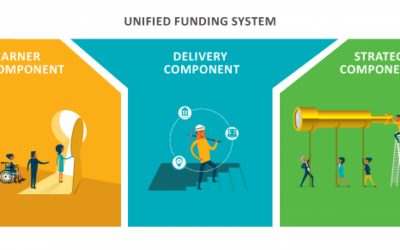
Unified Funding System
Unified Funding System The Unified Funding System (UFS), developed to deliver the changes to the tertiary sector brought about by RoVE, is a game-changer; however funding is not a game. The UFS is the latest component of the significant reforms intended to create a...